The trucking industry is entering a new phase of compliance, and it’s not something drivers or fleet owners can afford to ignore.
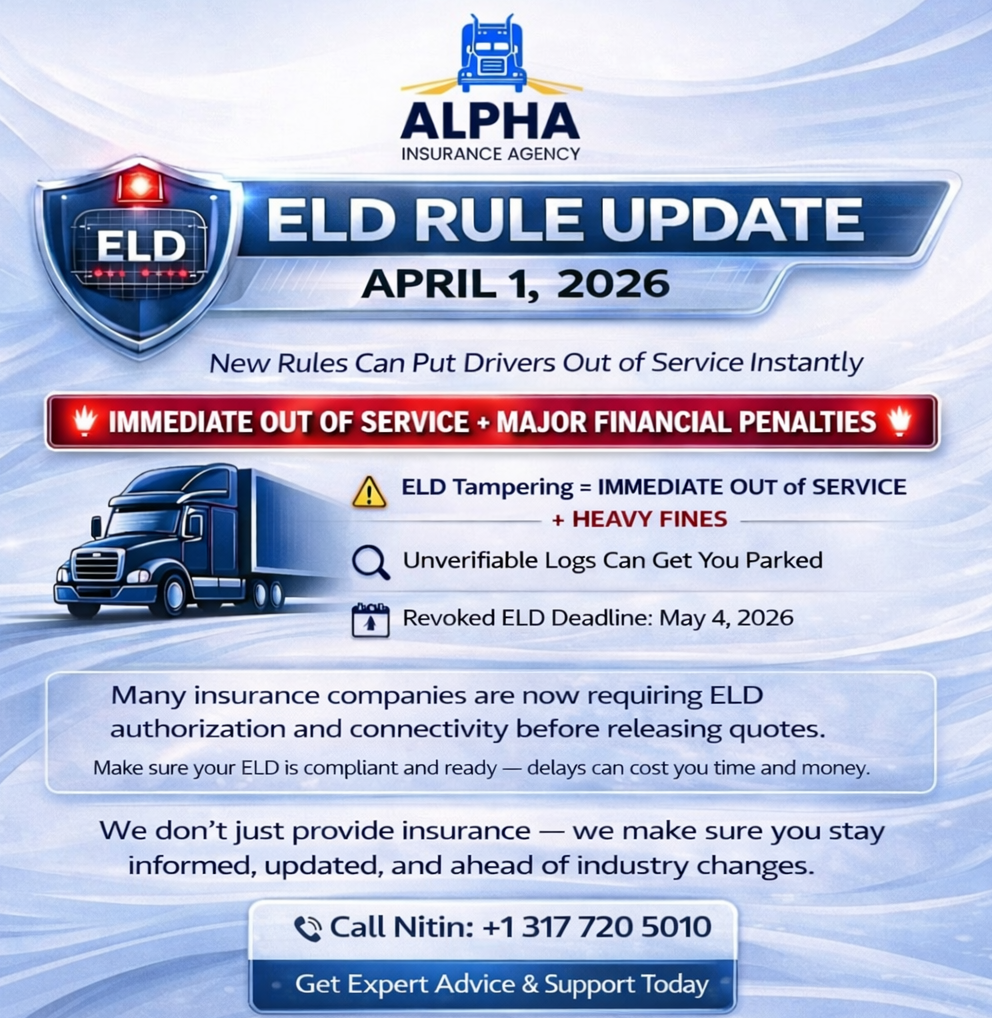
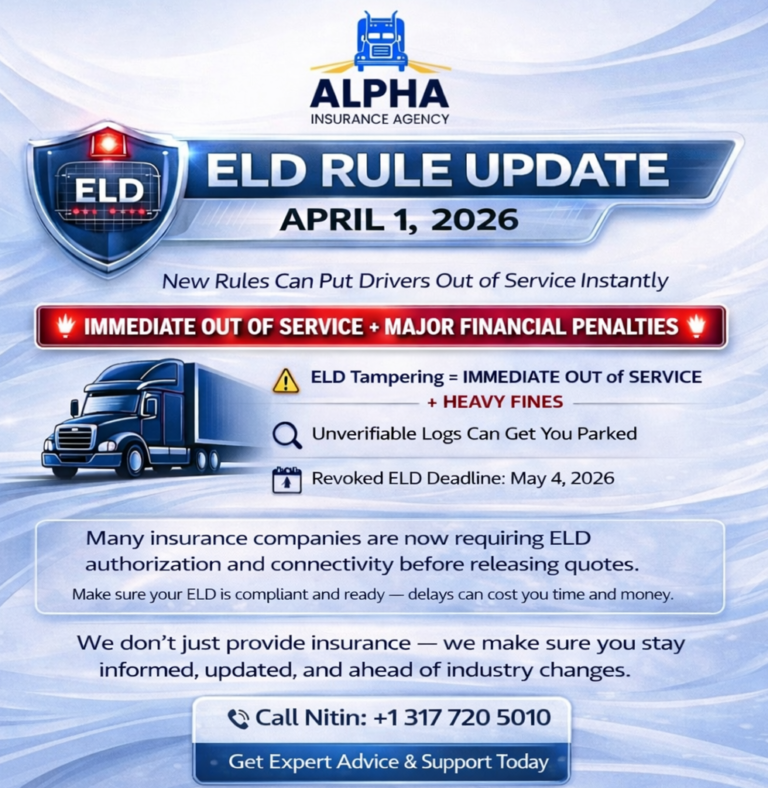
Starting April 1, 2026, the Commercial Vehicle Safety Alliance is implementing stricter enforcement around Electronic Logging Devices (ELDs). This update shifts the focus beyond just Hours of Service (HOS) violations — placing major emphasis on log accuracy, integrity, and authenticity.
If you’re an owner-operator or managing a fleet, this change could directly impact your operations, safety scores, and even your insurance approvals.
🚧 What’s Changing in the New ELD Rules?
The biggest shift is how inspections are conducted and how violations are determined.
🔴 1. ELD Tampering = Immediate Out-of-Service (OOS)
Any sign of tampering with an ELD device or its data can now result in an instant Out-of-Service order.
This means:
- Your truck is parked immediately
- Deliveries are delayed
- Revenue loss begins instantly
⚠️ 2. Inconsistent or Unverifiable Logs Can Get You Shut Down
Inspectors are no longer required to fully prove a traditional HOS violation.
If your logs appear:
- Inconsistent
- Incomplete
- Suspicious
👉 You can still be placed Out-of-Service on the spot
📉 3. Enforcement Is Based on Log Integrity — Not Just Driving Hours
Previously, enforcement focused heavily on exceeding driving limits.
Now, even if your hours look fine:
- Poor log accuracy
- Excessive edits
- Missing data
…can trigger violations.
📅 Critical Deadline: May 4, 2026
By this date, the Federal Motor Carrier Safety Administration will enforce a major compliance rule:
👉 Using a revoked ELD will be treated the same as:
- ❌ No logs at all
Which can result in:
- Immediate Out-of-Service orders
- Fines and penalties
- Increased scrutiny in future inspections
📊 Insurance Impact: What Most Truckers Don’t Know
This is where things are quietly changing — and catching many off guard.
Insurance providers are now:
- Requesting ELD access and data verification
- Checking connectivity and compliance status
- Reviewing log history for risk assessment
🚨 What this means for you:
- Non-compliant setups may delay your quotes
- Poor log records can increase your premiums
- Some carriers may refuse coverage altogether
This is becoming a major underwriting factor, not just a compliance issue.
💡 How to Stay Ahead of the New Rules
Staying compliant doesn’t have to be complicated — but it does require discipline.
✅ 1. Use a Fully Approved ELD
Make sure your device is listed and approved by the FMCSA.
✅ 2. Avoid Unnecessary Log Edits
Frequent edits can raise red flags during inspections.
✅ 3. Keep Logs Clean and Consistent
Accuracy matters more than ever:
- Proper duty status updates
- Correct timestamps
- No missing data
✅ 4. Stay Updated on Regulatory Changes
Most violations happen simply because drivers aren’t aware of updates.
✅ 5. Work with the Right Insurance Partner
Choose agencies that understand compliance and can guide you proactively — not just sell policies.
🚀 Final Thoughts
The 2026 ELD enforcement update is a wake-up call for the industry.
This is not about penalizing drivers — it’s about:
- Improving road safety
- Ensuring transparency
- Creating a more reliable system
Those who stay compliant and proactive will:
- Avoid costly downtime
- Secure better insurance rates
- Build stronger, more reliable operations
📚 Sources
- Commercial Vehicle Safety Alliance – Official inspection and enforcement updates
- Federal Motor Carrier Safety Administration – ELD compliance and revoked device list